How to Help Your High School Senior Prepare Emotionally for College
Senior year is filled with milestones: college acceptances, prom, graduation, and the excitement of what comes next. From the outside, it can look like a joyful season full of celebration and anticipation. But emotionally, this transition is often far more complex.
For many high school seniors, preparing for college brings up a mix of excitement, fear, pressure, grief, and uncertainty. They are not just preparing academically. They are preparing emotionally for one of the biggest transitions of their lives.
As a parent, it can be hard to know how to support them, especially when they seem excited one moment and overwhelmed the next.
At Collaborative Minds Psychotherapy, we work closely with teens and young adults navigating life transitions, and one thing we often remind families is this: emotional preparation matters just as much as practical preparation.
Keep reading for ways to help your high school senior feel more emotionally ready for college.
1. Normalize Mixed Emotions
Many seniors feel like they are “supposed” to be happy and excited about college.
Because of this, feelings like sadness, anxiety, guilt, or fear can feel confusing or even shameful.
Your teen may be grieving the end of childhood routines, long-term friendships, familiar teachers, family structure, or simply the predictability of home life.
Remind them that it is completely normal to feel more than one thing at once.
They can be excited and scared.
Proud and overwhelmed.
Ready and sad.
Helping them understand that mixed emotions are expected can reduce self-judgment and make it easier for them to open up.
2. Talk About the Emotional Side, Not Just the Logistics
A lot of parent-teen conversations during senior year become focused on logistics:
choosing a school
filling out housing forms
buying dorm supplies
planning move-in day
financial aid and deadlines
While these conversations are important, it is equally valuable to ask about how they are feeling.
Try questions like:
“What feels exciting about this next chapter?”
“What feels hardest right now?”
“Is there anything about college that feels scary?”
“What are you most worried about leaving behind?”
Sometimes teens need permission to talk about the emotional side of the transition.
3. Help Them Build Confidence in Everyday Life Skills
A big part of emotional readiness is confidence.
Teens often feel less anxious when they trust themselves to handle day-to-day life independently.
This may include:
managing their schedule
advocating for themselves
setting boundaries with peers
asking for help from professors or support staff
managing stress without parental intervention
Rather than doing everything for them, look for opportunities to help them practice independence now.
Small moments of mastery build emotional resilience.
4. Prepare for the Social Transition
One of the biggest emotional stressors for incoming college students is the social adjustment.
Even socially confident teens can worry about:
making friends
finding their people
roommate dynamics
feeling left out
managing homesickness
This is especially true for teens who have struggled with anxiety, social stress, or peer relationships in high school.
Talk openly about the fact that friendships in college often take time.
The first few weeks can feel awkward and uncertain for almost everyone.
Helping them set realistic expectations can reduce panic if connection does not happen immediately.
5. Strengthen Their Emotional Coping Skills Before They Leave
Senior year is an ideal time to help teens develop healthy coping tools they can take with them into college.
This might include:
identifying early signs of stress
creating routines that support sleep and mental health
practicing emotional regulation skills
learning how to challenge anxious thoughts
building healthy communication habits
The stronger these tools are before the transition, the more supported they will feel once they are on campus.
This is one reason group therapy can be especially helpful during this stage.
6. Give Space for the Parent Transition Too
This transition is emotional for parents as well.
Your child is stepping into a new phase of independence, and it can bring up pride, worry, sadness, and uncertainty for you, too.
Sometimes teens pick up on parental anxiety, even when it is unspoken.
Creating space to process your own emotions can help you show up as a grounded support system for them.
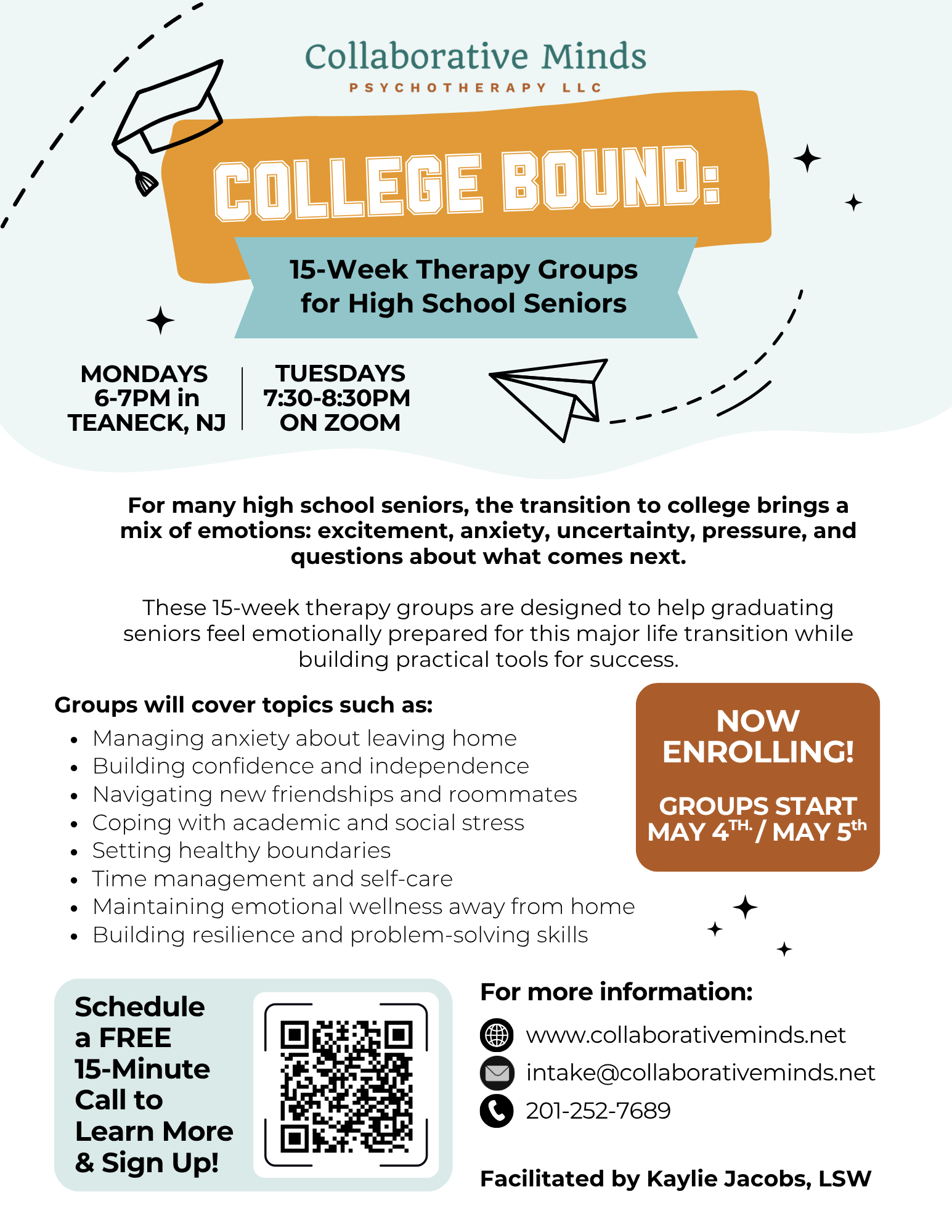
How Our High School to College Therapy Groups Can Help
The transition from high school to college is one of the most emotionally significant periods in a teen’s life.
Our High School to College Therapy Group is designed to support seniors as they prepare for this next chapter with greater confidence, emotional awareness, and connection.
In this group, teens can:
process the emotions that come with graduation and change
build coping skills for anxiety and uncertainty
prepare for social and academic transitions
strengthen confidence and independence
connect with peers going through the same experience
We are now offering both in-person and virtual options to make support accessible for families and students with different schedules and locations.
If your teen could benefit from extra support during this transition, we would love to help.
Contact us to learn more about our High School to College Group and reserve a spot!