High school is a time of constant motion. Teens are expected to keep pace with academic demands, shifting friendships, social pressure, and the ongoing job of figuring out who they are, all at the same time. One moment they may feel confident and carefree, and the next they are navigating life-shaping choices. These changes can feel exciting at times — a chance for growth and independence — but they can also feel confusing, isolating, and overwhelming.
For frum teen girls, these transitions often come with an added layer of social and emotional complexities. Questions about friendships, family expectations, identity, and decision making don’t always have clear answers, and many teens are left trying to manage these big feelings with few opportunities to slow down and really understand them. For parents this can be equally challenging, wanting to support, but unsure when to step in and when to step back.
How These Struggles Show Up
Often the struggle isn’t about one specific problem. It’s about the buildup of so many changes happening all at once. Friend groups evolve, choices become more complex, and the pressure to measure up grows. Girls may compare themselves to peers, feel unsure of their place, or worry about saying the wrong thing. These experiences can chip away at confidence, even in teens who appear outwardly secure.
Teen girls don’t always have the language to explain what they are feeling. Some internalize their stress, becoming overly self critical or anxious. Others may struggle with body image, self-esteem, or a sense of belonging. These reactions are signals that a teen is trying to manage complex emotions with still developing tools.
What Parents Can Do
Parents play an important role in helping teens feel supported during these years. One of the most helpful things a parent can do is offer emotional safety, a place where feelings are allowed, not rushed or minimized. Naming your own emotions and challenges models healthy coping and shows that struggling doesn’t mean something is wrong, it means you are human.
Another helpful approach is encouraging teens to engage with supportive peer spaces. While parental support is essential, many teen girls also benefit from connection with peers, whether through school clubs, community activities, or structured groups where they can process these shared experiences. Hearing someone else articulate a familiar worry can be deeply reassuring. When teens feel heard and validated by peers, it often strengthens their sense of belonging and reduces feelings of isolation. This kind of connection doesn’t solve every problem, but it gives girls a chance to reflect, receive feedback, and build social confidence, tools that extend far beyond the moment.
The Power of Shared Spaces
High school doesn't have to be navigated in silence. When teen girls have opportunities to connect with peers in spaces focused on reflection, relationship building, and personal insight, the challenges of these years can feel less overwhelming and more collaborative. These spaces allow young girls to build confidence and develop tools for navigating life with peers who understand them.
For frum Jewish teen girls, having access to a group that understands their cultural and religious values can be especially meaningful. A space that honors identity while supporting emotional growth allows girls to explore friendships, self-confidence, and relationships in a way that feels aligned and respectful.
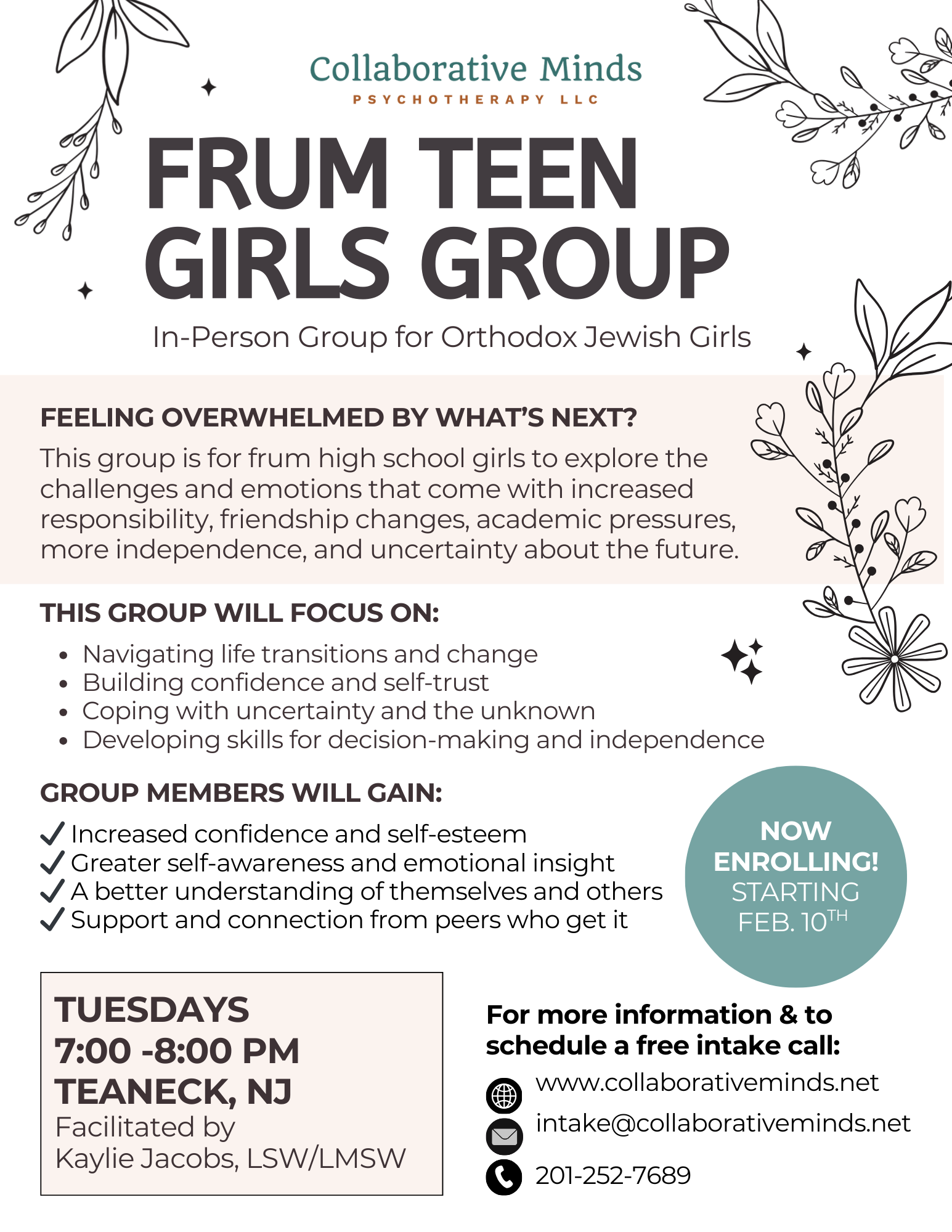
Some girls benefit from spaces designed specifically for this kind of connection. One such option is Collaborative Minds Psychotherapy's new Frum Teen Girls Group, created to offer exactly that kind of space. The group is designed to bring together a mix of teens—not around a single problem, but around connection, reflection, and personal growth. In this group, girls build real relationship skills, develop greater self-awareness, and gain tools that support them both socially and emotionally.
Growth Begins with Connection
Change isn’t always easy, but when teens feel supported, both at home and among their peers, they are better equipped to handle challenges with resilience and self awareness. Teens don’t need to be in crisis to benefit from guidance and connection. Sometimes what helps most is knowing there is a place to talk openly, feel understood, and grow alongside others.
Sometimes, growth begins not with answers—but with connection.