Helping your Child Build Social Confidence
Building Social Confidence
For young kids, friendships can seem simple from the outside. Adults often picture childhood as a time filled with easy playdates, carefree conversations, and natural social connection. But for many children, especially in the early elementary school years, social interactions are not always so intuitive.
Some children walk into a room and immediately join a game. Others hang back quietly unsure how to enter the conversation. Some children desperately want friendships but struggle with taking turns, reading social cues, managing frustration, or knowing what to say. Parents often notice these struggles building over time, a child coming home upset after feeling left out, avoiding group activities, or becoming anxious in social settings.
These moments can be hard to watch. Many parents wonder whether their child will simply grow out of it or if they should step in and help.
The truth is, social skills are exactly that - skills. And like any skill, they develop differently for every child.
How Social Struggles Show Up
Not all children express social difficulties in the same way. For some, struggles show up through shyness or hesitation. They may want to connect but feel nervous speaking up or joining group activities. Others may become frustrated easily during play, struggle with flexibility, or have difficulty managing disappointment when interactions do not go the way they hoped.
Some children who feel overwhelmed socially may appear withdrawn, while others respond by becoming louder, sillier, or more reactive. In many cases, these behaviors are less about misbehavior and more about a child trying to navigate social situations with still developing tools.
Young children are also deeply affected by how they feel around peers. When social interactions constantly feel difficult, confidence begins to suffer. A child may start believing they are bad at making friends or that other kids simply don’t like them.
This is often where extra support and guidance can make a meaningful difference.
What You Can Do
Parents play an important role in helping children develop social confidence. Children benefit most when social growth is approached with patience rather than pressure.
Instead of labeling a child as shy or awkward, it can help to focus on the specific skills they are still learning. Some children need support starting conversations, others need help tolerating frustration or managing big feelings.
Modeling social interactions at home can also be helpful. Practicing turn-taking, encouraging problem-solving, and naming emotions in everyday situations can help children develop their interpersonal skills naturally.
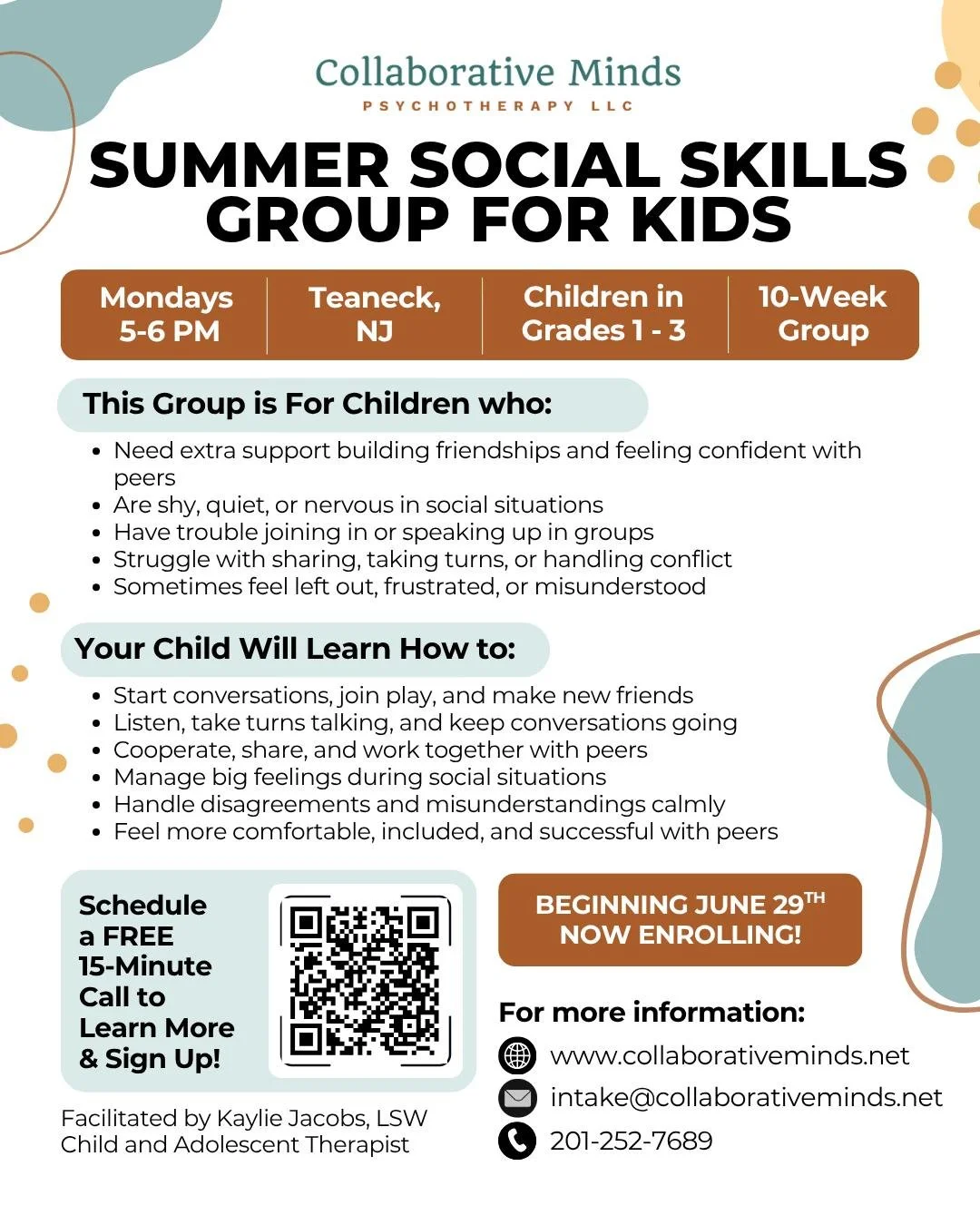
It can also be helpful for parents to consider social skills groups for children who would benefit from additional support practicing peer interactions. In these settings, children have the opportunity to build communication, problem-solve, and learn emotion regulation skills in real time with other kids their age. Because the environment is guided and supportive, children are often able to practice social interactions with less pressure and more confidence.
Children don’t need to be in crisis to benefit from support. Sometimes the goal is not fixing a major problem but strengthening a child’s comfort, flexibility, and confidence before struggles deepen.
The Power of Connection
Social growth rarely happens all at once. More often, it develops gradually through support, encouragement, and opportunities to connect.
And sometimes the smallest moments, joining a game, speaking up in a group, or feeling included among peers, can become the foundation for much bigger growth over time.
When children begin to feel more confident socially, the impact often extends beyond friendships. They begin to trust themselves more, approach new situations with great confidence, and feel more secure in who they are. Children are not meant to figure these experiences out entirely on their own. With patience, guidance, and supportive opportunities to connect, even small social successes can lead to meaningful emotional growth.