
Your Child Is Starting Group Therapy—Here's What to Expect
Group therapy is a powerful tool and it works best when parents understand how the process unfolds. This page will walk you through what to expect from the first call to the final goodbye session.
Starting Off
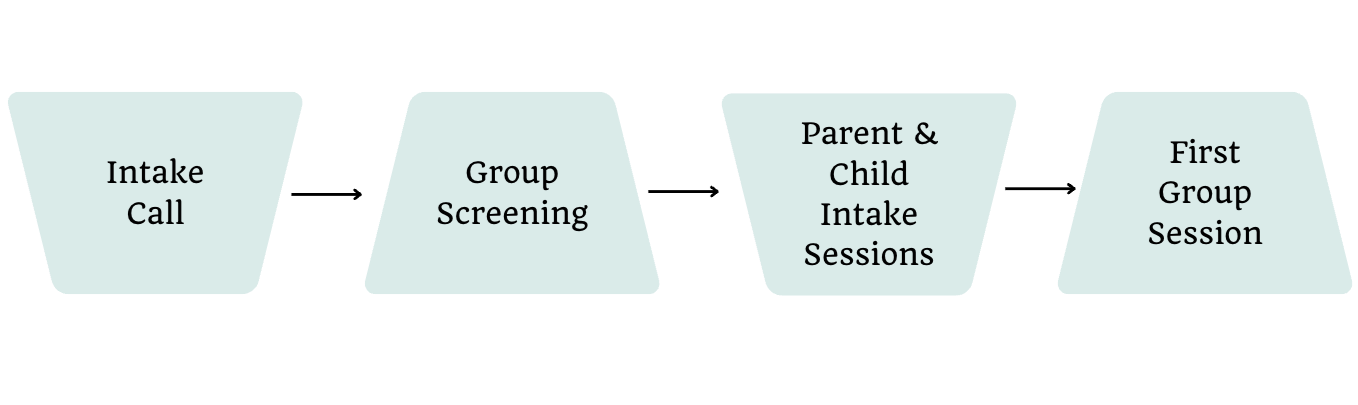
Before any child, tween, or teen joins one of our groups, we schedule an initial screening call followed by a formal intake session with the group therapist.
This isn't just a formality, research (and years of experience) show that kids do best in groups when they've had a chance to meet the clinician, ask questions, and understand what the group will look and feel like before their first session. This is also our way of ensuring that all of our group members are meeting with similar concerns.
During this call, we'll talk through:
Your child's goals and what's brought your family to group
What a typical session looks like
Any questions you or your child have going into group
Think of this as the on-ramp to group, it helps your child walk into that first session feeling prepared instead of nervous.
How We Track Progress
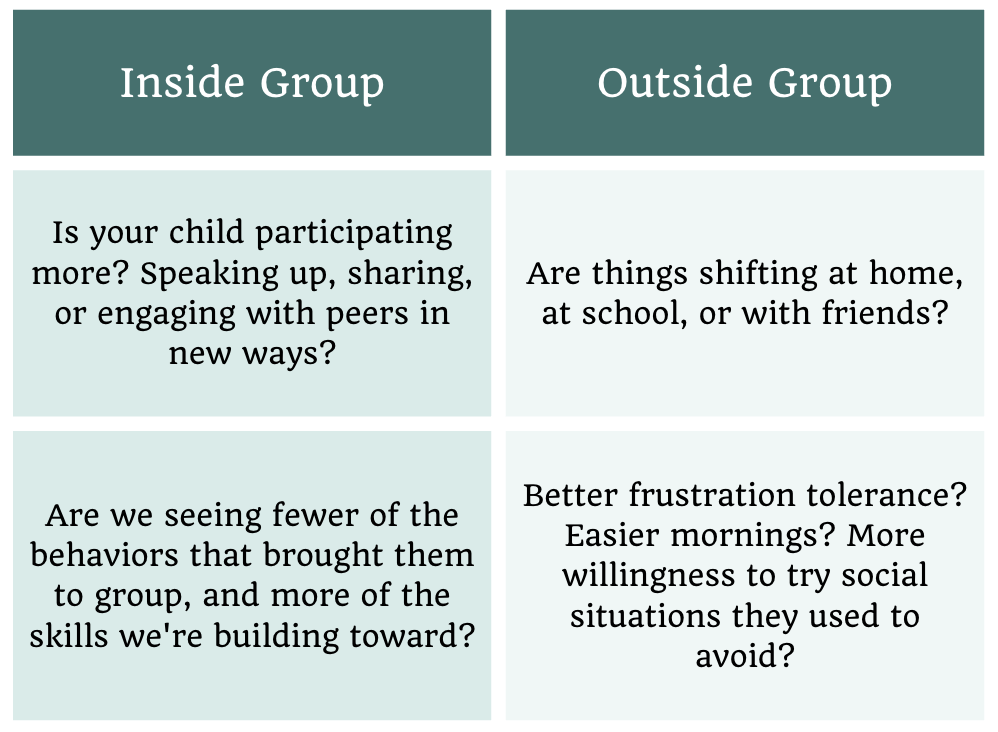
Progress in group will show up in two places—inside the group and outside of group—and it's normal for one to show up before the other.
Most of the time, progress inside the group shows up first and changes at home and school tend to follow a few weeks later. We encourage you to notice and celebrate even small wins along the way. Positive change fuels more positive change, and your attention to it matters as much as ours.
Setting Goals Together
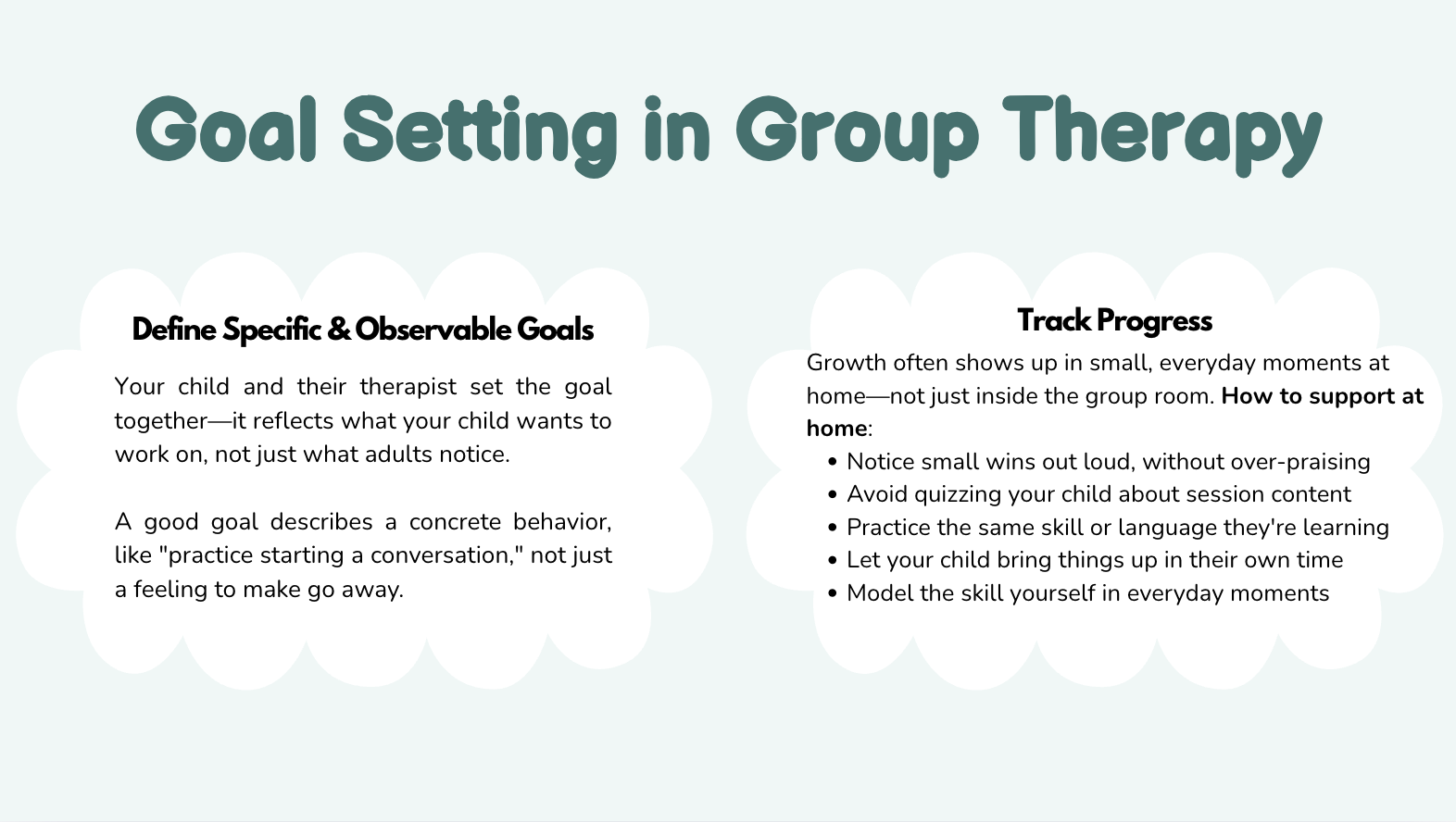
Early on, we'll collaborate with you (and, when appropriate, your child) to identify one or two specific goals to work toward in group so everyone knows what we're aiming for. Examples might include:
"Speaking up at least once per session"
"Using a coping skill before reacting when frustrated"
"Practicing a new way to join a conversation with peers"
Group leaders check in on these goals regularly and will let you know how things are progressing, what's clicking, what needs more support, and how you can reinforce the work at home between sessions.
A Note on Confidentiality
Because our groups serve everyone from young kids to young adults, how much we share with parents shifts depending on your child's age and the type of group:
For our children's and tween groups, we'll regularly share general progress, themes, and ways you can support skill-building at home.
For teen and young adult groups, we protect the same confidentiality we'd offer an adult client, because trust and privacy are often essential to teens opening up. We'll still loop you in on overall progress, attendance, and any safety concerns but we won't share session specifics without your teen's knowledge, except where safety requires it.
We're always happy to talk through what this looks like for your specific group during your intake session.
Ending Well
Group members build real relationships with one another and often become a source of support and belonging that extends beyond the room. Because of this, we never recommend ending group abruptly. Instead, we build in at least one final "goodbye" session so your child can leave group with closure rather than a sudden absence.
In a final session, we typically make space for:
Reflecting on progress and growth
Naming both the good and the hard parts of the experience
Acknowledging the goals that were met (and the ones still in progress)
Saying goodbye to the peers and leaders they've bonded with
If you're considering ending group, let us know as early as you can so we can plan this transition together.
Ready to Find a Group?
If you haven't already, book your intake call and check out our Group Enrollment Process & FAQ for more details on logistics, fees, and next steps. You can also fill out the form below and our intake coordinator will reach out to you.